
1 Simple Trick to Save Money and Clean up Your Bookshelf – A Paperbackswap Review
 People are always looking for different ways to save money and spend less, some of which are very creative. I am one of those people and a new site I found not only allows me to save money and time, but also helps me keep in line with one of my decluttering rules: For everything that comes into the house I get rid of one. Paperbackswap allows you to trade your used books for books from other users across the country.
The process is simple
- You put books you don’t want any more on your list for other members of the site to view.
- When someone requests a book from you, you send it to them at your expense although you can use Paperbackswap bulk discount if you so choose.
- You then get a credit that you can use to request a book from the catalog.
- When you request a book it is sent to you by a member who currently has it listed in their available books.
- You are free to keep the book as long as you like, when you receive a book it isn’t a loan. You are under no obligation to put it back on the list, you own it.
Paperbackswap currently lists just fewer than 4.6 million titles in their catalog which is ever changing. You can even put in a request for a book that isn’t listed yet so you will be in line whenever someone posts it.
The idea was sound, so I had to try it for myself before I could recommend it. I posted my first 10 books (to get my two free credits) and was shocked at how easy it was; I simply entered the ISBN numbers from the back of the book. They are fairly particular about the books they accept as far as their quality goes, I like to highlight and make notes in my books occasionally and this isn’t allowed unless it was a text book then there are different rules.
I immediately got a personal message from my personal guide. I immediately asked “Are you a real person?” I was assured she was although the first message was automated. So, I do have a personal guide through my swapping needs, always a nice plus to have that kind of help.
Sending my first two books took some time to get used to but it is a very nice process once you understand it. Paperbackswap has a very nice interface to walk you through sending your books. If you want to use their best services, however, you will need to buy “PBS money”, which is used on things like postage, but it did make things much easier. I printed the wrapper complete with postage and a delivery confirmation and wrapped my books
I still need to try just printing the address so I can simply put it in an envelope and send it. Which I think may be my least expensive method.
When I finally received my first book it was in excellent condition and arrived less than a week after I ordered it. If you choose to do so, Paperbackswap tracks the books every step of the way using the USPS delivery confirmation service. So, you shouldn’t have to wonder when your book will arrive.
It seems that the books I read are very popular but have a very specific market. So the books I have posted are going as quickly as I post them.
In fact using Paperbackswap‘s ”wish list” you can automatically request a book as soon as it is posted. Apparently people were wishing for my books because they are flying out my door, it has created a little extra work but you only have to put up the books you are willing to send so the amount of work you have is up to you. However, since I want to read books in this same niche` there are a lot of people wishing for them but not a lot of people posting them. So, I have some credits stacking up.
It seems if you just want fiction books they seem to be easier to come by than their non-fiction counterparts.
Have you tried it? Does it sound like something you would try? Let me know what you thought of the review so I can improve.
This article contains affiliate links.

6 Lazy Ways to Increase Savings
I like to be lazy and I like to save money so I have discovered a few easy lazy ways to increase savings rates.
- Use direct deposits – One of the foundational lazy ways to increase savings is only deposit what you require to meet your needs into your regular bank account. This will help to prevent you from spending more than you have budgeted. It will also prevent lifestyle creep (the tendency to spend more as you make more) because you will not see your raises when you get them, you won’t spend them.
- Automate your savings – I use Capital One 360 because it lets you have virtual envelope savings accounts. I deposit money into my main acco
 unt there and then it is automatically transferred into various savings accounts which are earmarked for various needs like Christmas, Insurance etc.
 - Automate your investing – For this I use Betterment, money is again automatically transferred every paycheck into long term investment accounts. I can’t forget to do it. I would have to make an active decision to stop investing. It helps keep you goals on track, and you don’t even have to think about it.
- Sign up for your 401(k) – Seriously, if you are not taking advantage of your 401(k) and any match your company may give you, start yesterday. Any money your employer matches is a guaranteed gain. Why would you turn that down?
- Consider a bi-weekly mortgage – If you may half of your mortgage payment every two weeks you will end up making 13 payments a year. This small change can save you tens of thousands in interest over the course of a mortgage. it will pay off your 30 year note in 25 years. Some banks don’t accept partial payments, however, so you need to check with them.
- Coin jar – If you use cash at all at the end of the day drop your change in to a jar of some sort, or one of these nifty Coin Sorting Banks
. When you cash it in move the money immediately to savings.
Just a few lazy ways to increase savings. These methods will improve the rate you are saving money with only a little up front work on your end. They pay remarkable dividends down the line.
This article contains affiliate links
Image by 401(K) 2013

5 Easy Ways to Save and Recycle Around the House
There are always people selling products that you can make yourself. I have found some easy ways to save and recycle around my own garden that you may help you.
A simple trickle watering system is an easy way to save money and water.
Plastic Milk Jugs as Watering System — I have used these to help me save time while I water my plants and water more effectively. I put a few small holes in the bottom of the bottle and fill it with water and then set it at the base of my berry bushes. The water seeps out slowly allowing the water to sink in and water deeply instead of just on the surface forcing the roots deeper in to the ground for a healthier plant. If you use just one small hole at the bottom and one at the top it is a great homemade drip irrigation method. You don’t lose water to evaporation like you can with sprinklers and you don’t water where you don’t want plants so weeds have a tougher time growing.
I have also buried half gallon jugs in the ground again with holes poked in the side beside the plant and then filled it up with water and capped it. The water seeps out slowly again watering the roots of the plants and making for stronger plants.
Homemade Mulch — We have a large mulched area in our back yard and we also had a bad ice storm tear through our area that took down a lot of our trees. So we rented a chipper and went to town, in just an hour we had a lot of mulch to help cover our garden. I wouldn’t recommend putting it near the house because of insects but this is at the back of our property. The money I spent on the chipper was less than the cost to have the waste hauled away, or to buy enough mulch to cover the space.
Compost – If you have houseplants or a garden you probably already know the value of compost, but did you know there are ways to compost that don’t involve large piles of waste and that smell? There are plenty of plans on the Internet to build a worm compost bin. Worms eat your food scraps and produce great compost. I recycled two plastic storage bins to build my compost bin. As we were cleaning our out our house and eliminating junk we had extra bins.
Plastic Containers — A lot of cold cuts not come in clear plastic containers that are perfect for washing and using again. In fact they look exactly like a name brand storage container. Why pay for new plastic storage containers when you already have some in your meat drawer.
Newspaper pots – If you still actually get a newspaper, I pick up a few just for this tip now, you can make biodegradable seedling pots from them. Here is a great instruction over at instructables.

Money as fruit of repentance?
Fruit of Repentance
In doing some research for my upcoming book I stumbled into something I can’t believe I had never heard in all my years of being a Christian. It really makes a connection between discipleship and our wallets in a way I had never seen before.
John the baptist calls people to “Bear fruits in keeping with repentance.” They are convicted, or perhaps just scared and ask “What should we do?”
John calls them, not to a generic love, but to a specific material act:
“Whoever has two tunics is to share with him who has none, and whoever has food is to do likewise.”
Tax collectors also came to be baptized and said to him, “Teacher, what shall we do?” And he said to them, “Collect no more than you are authorized to do.” Soldiers also asked him, “And we, what shall we do?” And he said to them, “Do not extort money from anyone by threats or by false accusation, and be content with your wages.” (Luke 3:12-14, ESV)John’s answer to each group was one dealing with money or material possessions.
This has me really wondering, more than I normally do,] about how much of a connection there is between your heart and your wallet. Maybe what Jesus was trying to communicate with us when we said “Where your treasure is there your heart will be also.” is much more serious than we would like to believe.
Jesus challenges us to understand the pull that material wealth and possessions will have on us in this life. If not checked these possessions will pull is hard enough to make us act in ways that are contrary to our profession of faith.
I can remember when our church was moving into a new building and my wife and I had saved up a decent amount of money we intended to use to pay off our second mortgage. When I realized we were going to need a lot of money fast to move into our new building my first thought was pretty selfish:
I need to pay off the mortgage as quickly as possible so I wont have the money to give it to the church.
I know I am the only one who would have thought this way, right? The fact in my heart was in paying off my debt and not in furthering the progress of the Gospel in our city. Is it bad to pay off debt? Absolutely not! But is is bad to be so focused on doing so that you give up being generous? Yes.
How we act with our money is a direct indicator of our much we treasure God and his plan over the things of this world. You always have enough money for the things you love and put first.
How do you think the church needs to work toward showing this fruit of repentance?
Image by ollesvensson

7 Stewardship Principles
 There are certain stewardship principles that encompass all other tips we can express. They are not sure fire paths to riches but principles that should guide any Christians view of money.
- Be generous first – Deuteronomy 26 calls for a sacrifice of the first fruits of the harvest as a sacrifice. It is a principle of the Bible to give the first to God and not to wait to give your leftovers. You will always have money for what you pay first. People often say they can’t give any money to the Gospel but it is often because they wait until after they have spent it all to think about giving.
- Pay yourself second – Similar to #1 you should pay your self second. If you wait until the end of the month to invest what is left then you will regularly find you have little or nothing left for yourself.
- Have a plan for your money – There is an old cliche that says “Failing to plan is, planing to fail.” I say it this way, “Your money will be spent somehow; you can decide where or let it to chance” You should create a plan on how all of your money is going to be spent. That doesn’t mean just when going to the store, but where you will invest it. Have a plan for all of your money. Call it a budget, or a plan but you have to know where your money is going.
- Don’t leave money on the table – We do it all the time in many ways; here is how to avoid a few of them. Negotiate on everything. You never know when it could save you some money. Make the most of your 401(k), make sure you are getting all the match you can.
- Spend less than you make – This should be obvious to anyone not in government but you can’t survive for long spending more money than you bring in. Eventually those bills will come due.
- Have an emergency fund – Start with a baby fund of $1000 or so, because everything thing that goes wrong seem to cost around $1000. And then move to having 3-6 months of expenses set aside in case you lose your job or have some other financial emergency.
- Understand your insurance needs– Insurance can be an important part of your financial plan. Depending on your situation in life you may need more or less. Insurance can prevent certain financial disasters. A cheaper premium may be cheap for a reason, so research before you do business with any company.
These stewardship principles are crucial to getting off on the right foot. In fact if you were able to stick to all 7 you would be better than 95% of people in America.
image by Dee’lite

Top Posts for January 2014
Top posts for January
- 100 Money Saving Tips – Pretty self explanatory and thanks to some Pinterest traffic this has been my top post since it was published.
- Create a Budget – This series on creating a budget, why you should and how to go about it. Most importantly why this isn’t the end all be all to stewardship.
- Betterment Review – Betterment is the investment company I use because of its simplicity, diversity and low cost. This is my review of Betterment.
- Fight the Cultural Tide – Living a simpler life to give to the gospel and be a good steward will definitely put you in a position of swimming against the tide.
- First Ebay Sale – I wanted to start selling some things to save space in our house and save up some money. Here is my story.
- Book Progress – I have started working on a book that I have wanted to write for quite some time. Here is where you can see my progress.
- Give yourself a raise – This article can help you get more money in your paycheck so you can do better things with it.
- Maximize Employer Benefits – Many employers have more benefits than you know and you should use them to your advantage.
- 20 Financial Questions to ask before Marriage – Just 20 conversation starters I give to pre-marriage classes.
- Envelope System – This article will tell you how to keep yourself on your budget by using the envelope/cash system.

Fight the cultural tide
 If you are going to try to live a life of simplicity and stewardship you are going to fight the cultural tide all the way. Not only the explicit powers of marketing, which are constantly trying to convince you of some felt need or another, that only they can solve, but there is implicit marketing going on all the time.
Think back to how many homes in old sit coms were large enough to have two staircases. We grew up seeing people, even “middle-class” ones, living in luxury that most of us will never see. According to this article from Bankrate even the “2 Broke Girls” live in an apartment that costs $2000 a month. And Penny from the Big Bang theory is living in a $1500 a month apartment by herself with at least a $100 a week wine habit on the tips from the Cheesecake factory. That simply isn’t possible.
These lifestyles are just not realities for most of us, they aren’t even realities for the characters on TV, but we are told over and over again that this is the lifestyle we should have. If you are being a good steward of your money and giving sacrificially it can be hard to make ends meet let alone live up the lives we see around us constantly. In order to live as God calls us to we must learn as Paul said, “I have learned in whatever situation I am to be content.”
It is all to easy to find ourselves comparing our homes, cars and lifestyle to those around us. What we never see is the numbers underneath or the sacrifices that had to be made to accomplish that lifestyle. When I find myself struggling with wanting to keep up with the Jones’ I just assume they are drowning in debt and have no savings. Even if it isn’t true, it helps to crush my pride. I am not quite at the point where I can just be OK with it, it is part of my pride. I confess it.
Living contentedly means that our lives can be simpler. We can be satisfied in Christ and all he is to us and not have to worry about keeping up with the Jones’. Some times that means living with less and some times it will mean living with more, but always being satisfied with our lives and always giving joyfully. It is easy to think and live this way when you are young and your friends are all broke, but it takes a certain level of confidence to live this way without feeling inferior, as you get older and your contemporaries are moving into larger homes and driving newer cars. But, Christianity will be facing much more of an uphill battle as the common culture in America turns more secular, we should get used to it.
What do you think? Let me know in the comments below.
Follow us in the upper right hand corner of the site to keep up with all that is going on.
First Ebay Sale
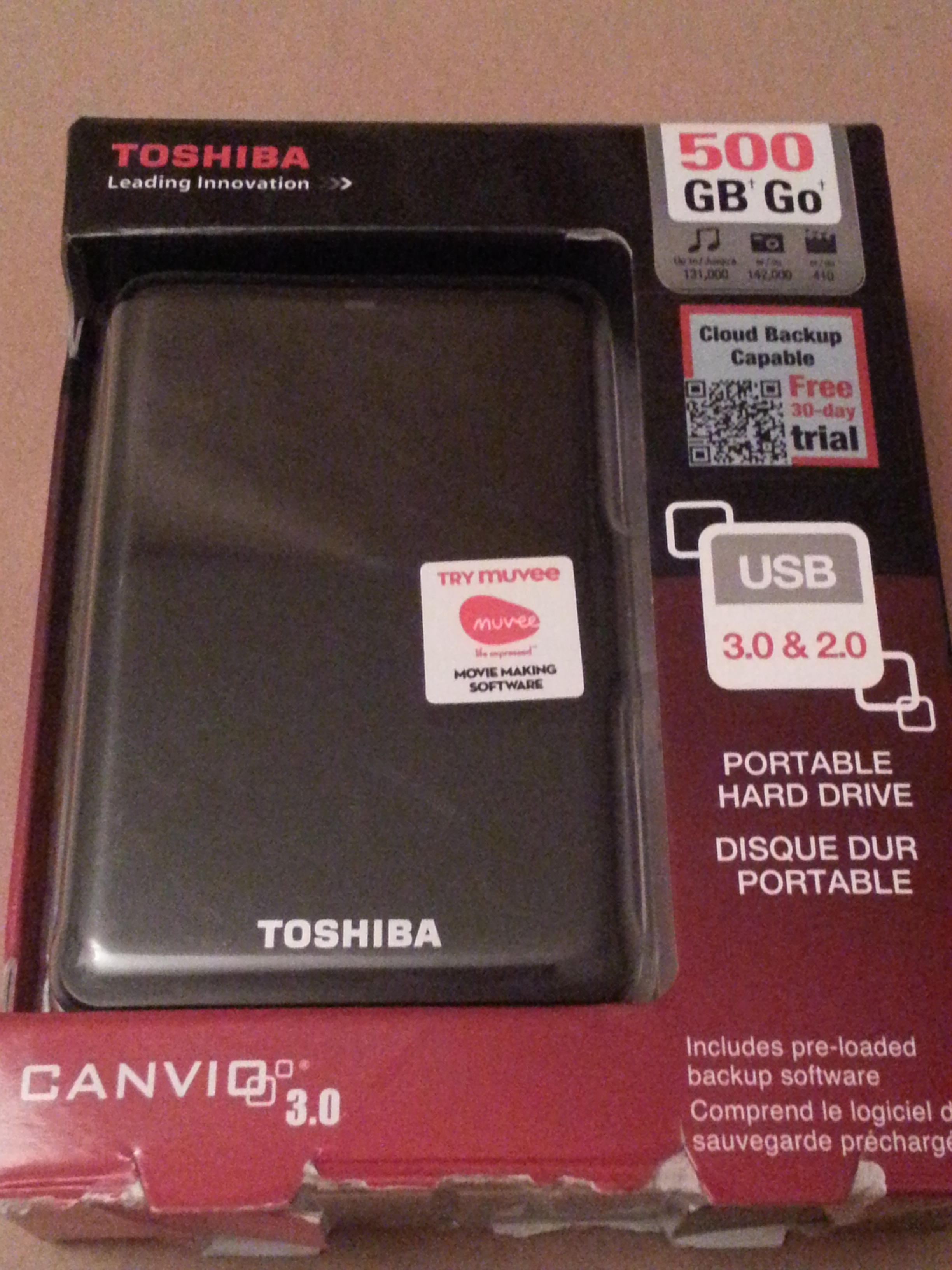
As part of my New Year resolution I have posted my very first Ebay sale. It is a hard drive that has been sitting on a shelf in the box for a while now. The reason for the sale is two fold; we are looking to save up for a down payment for a house and so I am going to try to sell some things we have had around the house that we no longer need and secondly our house feels too crowded with stuff and we are looking to simplify and get rid of things we no longer need or use.
A lot of things have changed since I last looked at selling things on ebay which made my first ebay sale much easier.
- Setting up the listing was incredibly simple – I was able to model my listing after others already in the system and it took care of most of the information for me. I took a few pictures with my phone and up loaded them.
- Shipping was a breeze – I was very conserned with how to deal with shipping. I don’t ship a lot of things and I did a little research with UPS and USPS but turns out ebay has you covered there as well. They knew my product and suggest a flat rate USPS option that I had already concluded I needed. It made me feel much safer.
- Anyone can do a “Buy it Now” – Last time I has looked into it (admittedly a long time ago) only experienced sellers could do a buy it now sale. Meaning you don’t have to play the auction game but could simply buy it outright.
The item sold after a week for $35, which is more than I paid for it. All in all Ebay has improved a great deal since the last time I had looked into selling. It could be a great way to earn some money and simplify your life by getting rid of some things you no longer need.

Maximize Employer Benefits 5 tricks
If you have a decent job you probably have some benefits you are not taking advantage of or maybe not even aware of. This article will show you 5 ways to maximize employer benefits. There may be many ways you are leaving money on the table by not taking advantage of benefits that you employer is offering.
1. The 401(k) – Maximize it for employer contributions
Maximize employer benefits and get more money
A 401(k) is an employee sponsored retirement account. Many companies match your contributions at one level or another which means you may be leaving money on the table if you are not using this plan. Find out what your company does for a match and at least contribute the maximum amount they match.
For example if your company matches 100% up to 4% of your salary like mine does then you should at least contribute 4% of your salary because you are doubling your money. If the company match is 50% up to 4% you should still contribute 4% because a 50% return on your money is still better than most you will get on the market and more than you are paying on any debt you have, unless you are into Frankie the Shark for some money in which case you should pay him first.
2. FSA – Use it to reduce taxes.
A Flex Spending Account allows you to set aside up to $2500 pre-tax dollars to pay for medical expenses in a given year. That means you subtract up to $2500 from the money you are paying taxes on. Keep in mind you can only roll over $500 dollars of that money the rest is use it or lose it; And the Affordable Care Act eliminated the ability to use an FSA to pay for over the counter products to soak up any extra you would have at the end of the year so be careful.
Think about any prescriptions you have or glasses you may need as well as any co-pay you may have to determine how much you may need and aim low because if you don’t use it all it goes back to your employer.
3. Dependent Care Spending Accounts – Reduce more taxes.
These accounts are very similar to the FSA but The dependent care account reimburses dependent day care expenses necessary while you (and your spouse, if you’re married) are attending school on a full-time basis or working. Typically, these would be day care expenses for children, but you can also use this account to reimburse day care for other dependents, such as spouses, parents, or grandparents, who cannot care for themselves. Your dependent must live in your home at least eight hours a day.
There are a lot of technicalities on this one so make sure you understand the detail of how it works. For example I put money into pay for preschool but could not pay for the whole year (as I thought) because the period spanned over two calendar years and I was only able to pay for the calendar year I was in.
4. Tuition Reimbursement – Why not get paid to go to school
Many companies offer tuition reimbursement of some kind if you wish to get a degree or further your education. Many require it to be in the field you are working in and some require you to work for the company for a number of years after you last take the reimbursement but you can often pay the money back.
5. Professional Development – Get paid to get better at what you do.
Many professional companies have training budgets. Our managers tell us that it often goes unused because no one takes advantage of it. If your field offers certifications the company may pay for the training or it may pay for the testing required for the certification.
There may be other ways you can maximize employer benefits; it it all depends on what your company has to offer. Take a look and ask around. Often there are benefits that are almost secrets in companies.

Betterment Review
I have been using Betterment since February of 2012 for my long term investment and savings. I have wanted to do a Betterment review for a while but wanted to break it in before I gave my opinion. Betterment is a website that makes investing simple enough for everyone. It makes investing stress free and easy. I have tried picking my own stocks but fees ate up whatever profit I may have gained. Betterment’s fees are incredibly low and they allow you to set a risk level you are comfortable with for all you different savings goals.
Getting Started
If you are trying to save money you know now is a bad time. Low interest rates are great if you are looking to buy a house but if you want to save your money low interest rates are not your friend. Unless you have 50,000 or more to invest a lot of firms won’t even talk to you. This is one of the reasons I love betterment.
Betterment breaks down your accounts by the goal you are looking to achieve. So, when you create a new account it will ask you to select a goal. Like Safety Net, IRA, Educational.
Then you simply answer a few questions about your goal. How much would you like to have in that goal at what time? Do you need 20K in 10 years for a child’s education? How much can you start with? Based on those questions Betterment will recommend a portfolio on a simple Stocks(Risky but rewarding) v. Bonds (More secure but less reward) scale. So, for our down payment goal which we hope to use in the next few years we are less risky and have 80% in bonds but in our daughters college accounts which won’t be needed for 10 years at least we use 80% stocks. It will also tell you how much you need to deposit each month to reach your goal and that can be automatically done through Betterment as well and automatically drafted from your selected checking account.
Customer service was remarkable when I called Betterment to see why I couldn’t have more than three goals. (This was early on the now allow many more) I got a real person almost right away who was very helpful and got me into the beta test for more goals.
Returns
So far the best thing about Betterment besides the automation, which I am a big fan of has been the returns. Keeping in mind that past performance does not indicate future performance and all that we have had some great returns for our the college funds. The total balance has some more conservative accounts like our house down payment account but over all I have been very please with the returns. The functionality of the site is superb making it very easy to get started saving with more than .25% interest rate or whatever banks offer these days. They even let you try it out for 30 days free.
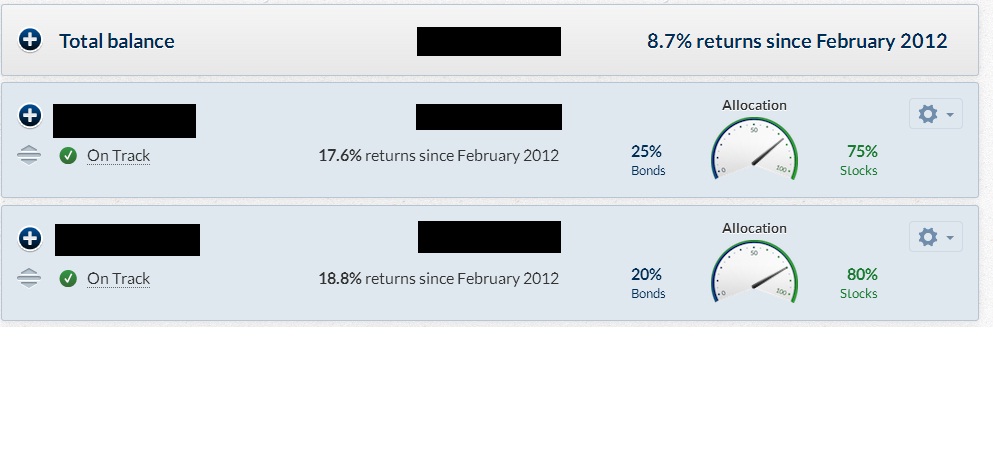
Our overall rate of return has been 8.7% but our college funds are over 17%.
Fees
The fees are simple and inexpensive as well.
- If you deposit less than $100 per month it is a flat $3
- If you auto deposit at least 100$ a month your fee is a flat .35%
$5000 = $1/month - If you have $10000 or more across all of your goals your fee goes down to .25%
$10000 = $2/month. - Over $100,000 in all of your goals and your fee is only .15% and you get many other options to customize your plan.
Over all if you are ready to make the move into having your money make money for your Betterment is a great way to get started.
This article contains affiliate links… You get $25 and I get $10 if you sign up through these links…Betterment